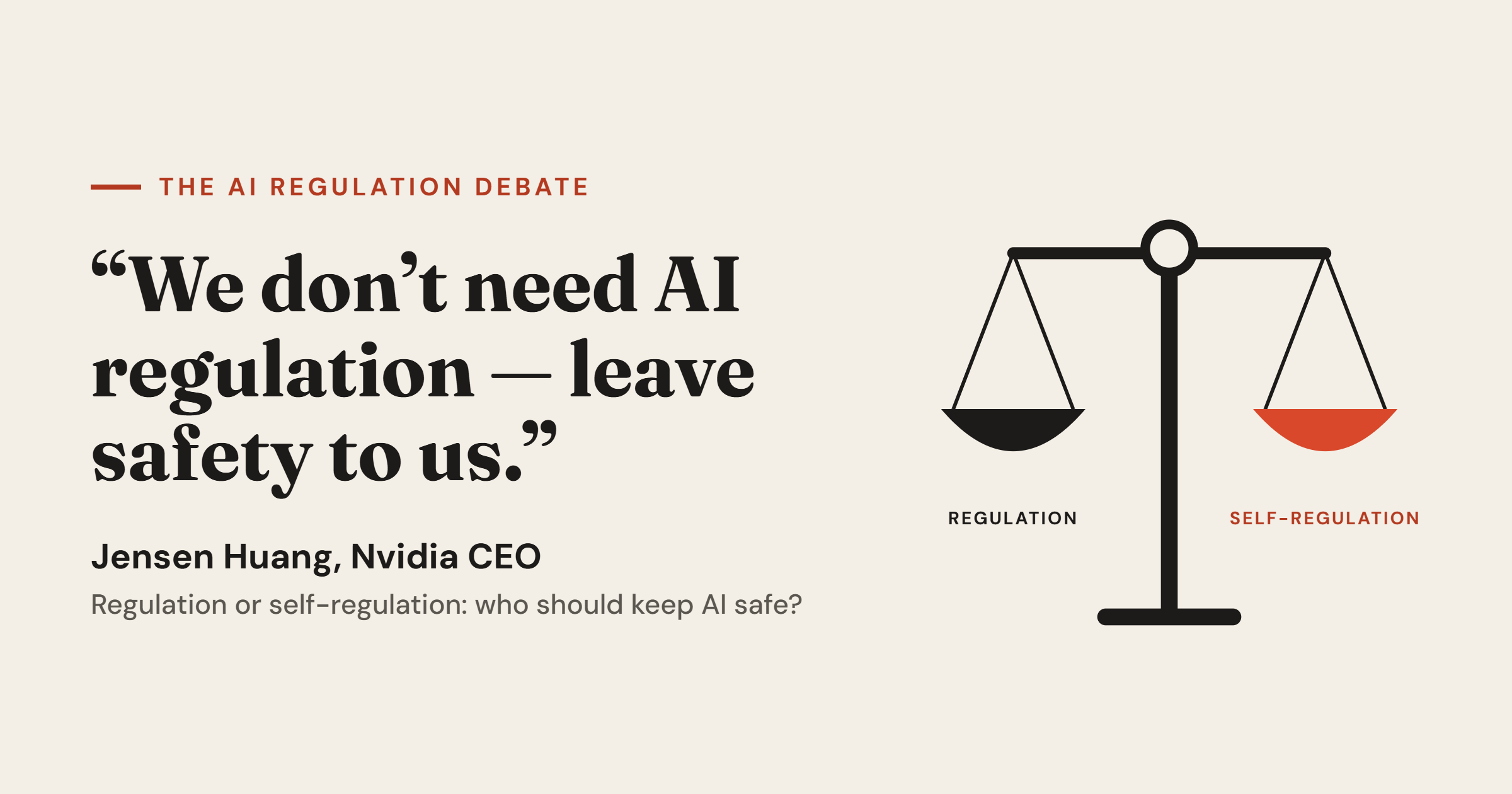
Nvidia CEO Jensen Huang says the AI industry does not need outside rules. In a recent public address, he said, “We don’t need AI regulation — leave safety to us.” His words have started a new round of debate about how to keep artificial intelligence both safe and fast-moving.
What Did Jensen Huang Say About AI Regulation?
During a public address, Huang said AI companies, not outside regulators, should be responsible for safety. He believes developers can build safety into their own products.
His exact words were: “We don’t need AI regulation — leave safety to us.”
Why Does Huang Say AI Is Not an “Alien Mind”?
Huang said people should not think of AI as an “alien mind.” Instead, he described it as a mix of hardware and software. In his view, this means its creators can manage it responsibly. In simple terms, his point is that people build these systems, so people can manage them.
What Is AI Regulation?
AI regulation means rules, usually set by governments, about how companies can build and use AI. These rules can cover safety, ethics, and misuse.
The other approach is self-regulation. Here, companies set and follow their own safety standards. This is the approach Huang supports.
The Debate: Regulation vs. Self-Regulation
As AI becomes part of more industries, the debate has grown louder. Here are the two main views.
People who support regulation say:
- Oversight is needed to prevent misuse of AI.
- Rules help make sure ethical standards are met.
People who support self-regulation, like Huang, say:
- The industry can manage safety on its own.
- Developers have the skills to build safety into their products.
Both sides want safe AI. They disagree on who should be in charge of making it safe.
Why This Matters to You
- For everyday users: The outcome will help decide who sets safety standards for the AI tools people use daily, companies or governments.
- For businesses: Many companies now use AI at work, from small businesses saving time with AI to firms launching AI agents for business users. Safety rules, or the lack of them, affect which tools they can trust.
- For developers and startups: Self-regulation would put more responsibility on the people who build AI.
An Example of Industry-Led AI Safety
Some groups are already working on safety from inside the industry. For example, Base Labs, Hugging Face, and Goodfire are building safety measures for open-weight AI models. This shows what developer-led safety work can look like. People on both sides of the debate will likely watch efforts like this closely.
Things to Keep in Mind
- Huang’s comments show confidence that developers can build safety into AI.
- Supporters of regulation argue that outside oversight is still needed to prevent misuse and protect ethical standards.
- Neither side has settled the question yet, and the debate is still developing.
What Happens Next?
It remains to be seen how Huang’s stance will influence policy-making and industry practices. People in the tech community will likely weigh the benefits of self-regulation against the risks of unregulated AI. To follow how rules are shaped, keep an eye on our technology policy coverage.
Frequently Asked Questions
What did Jensen Huang say about AI regulation?
He said, “We don’t need AI regulation — leave safety to us.” He believes AI developers should be responsible for safety.
Who is Jensen Huang?
He is the CEO of Nvidia.
What does Huang mean by “alien mind”?
He said AI should not be seen as an “alien mind.” He described it as hardware and software that its creators can manage responsibly.
What is the difference between AI regulation and self-regulation?
Regulation means outside rules, usually from governments. Self-regulation means companies set and follow their own safety standards.
Will Huang’s comments change AI policy?
That is not yet clear. How his stance will influence policy and industry practices remains to be seen.
Conclusion
Jensen Huang’s view that AI does not need regulation raises big questions about the future of AI governance. As the technology grows, open talks between supporters of regulation and industry leaders will help shape a safe and innovative AI future.
Want more stories like this? Visit our latest technology news page.
- AI safety
- AI regulation
- AI self-regulation
- Nvidia CEO
- AI governance