Google has officially announced Gemini 4 Carbon, its latest AI model. The company says it improves on its predecessor, Argon, but there is a catch: details about public access and everyday uses remain unclear.
So what do we actually know, what is still missing, and why does access matter so much? Here is a simple guide. For more AI coverage, explore our Artificial Intelligence section at Jantarax Tech.
What Is Gemini 4 Carbon?
Gemini 4 Carbon is the newest model in Google’s Gemini family of AI systems. Reports describe it as designed to deliver better performance and efficiency than earlier versions, especially on complex tasks.
One description in the reports is blunt, calling it a “slightly better version of Argon.” That phrase suggests an upgrade, not a leap, though the real gap will only be clear once independent testers can try it.
What Does “Frontier Model” Mean?
A frontier model is an AI system at or near the leading edge of what the technology can do. These models often require huge amounts of computing power to build and run, and they tend to be the most capable and the most closely watched.
Calling Gemini 4 Carbon a frontier model signals that Google sees it as advanced. However, the source says the specifics of those advances have not been fully disclosed. Until Google shares more, claims about its abilities are mostly guesses.
What Do We Know About Argon?
The reports compare Gemini 4 Carbon with its predecessor, Argon. Beyond that comparison, the source does not explain what Argon could do or how large the improvement is. For details, check Google’s official announcement or technical documentation when available.
The Big Question: Can You Use It?
This is where the story gets interesting. Early reports indicate that Gemini 4 Carbon may not be available for public use. That raises several questions:
- Who gets access? Only Google’s researchers, select partners, or paying customers?
- Is there a release date? None has been shared in the source material.
- How will people try it? Through an app, an API for developers, or not at all?
- What will it cost? Pricing has not been mentioned.
When a powerful model stays out of public hands, its real-world impact shrinks. Developers cannot build with it, businesses cannot test it, and independent experts cannot check Google’s claims.
Why Does Access to AI Models Matter?
Access shapes who benefits from AI.
Testing and trust. Open testing helps verify what a model can and cannot do. Without it, people must trust a company’s own descriptions.
Innovation. When developers can use a model, they build new apps and tools that the company itself may never imagine.
Fair competition. Limited access can concentrate advantages in a few large organizations. For a look at how smaller players use AI, see our guide on how small businesses are saving time with AI.
Safety. There is a trade-off. Some companies hold back powerful models because they worry about misuse. Others say wider access allows more people to find problems. The debate is tied to the larger discussion about AI rules, which we cover in our brief history of AI executives calling for regulation.
Is Limited Access a Bad Sign?
Not necessarily. There are several possible reasons a model might not launch publicly right away, though the reports do not say which applies here. These are general possibilities, not confirmed reasons:
- The model may still be in testing.
- Google may be building safety measures before wider release.
- The model may need too much computing power to offer at scale.
- Google may be planning a staged rollout, starting with limited partners.
Without an official statement, we should avoid assuming the reason.
How Does This Fit Google’s AI Strategy?
The announcement underscores Google’s ongoing commitment to advancing AI. Google competes with other major AI labs, each releasing new models at a fast pace, and each announcement helps signal progress to developers, investors, and customers.
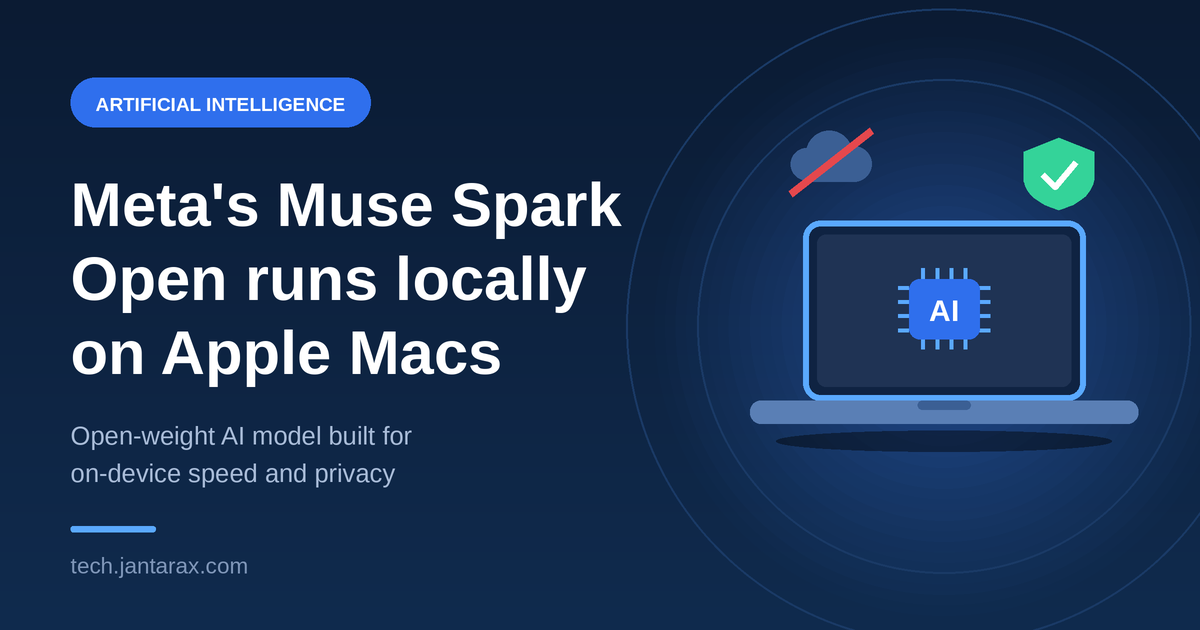
But announcements and availability are different things. A model that people cannot use is harder to judge than one they can try for themselves. For another example of a model built with accessibility in mind, see our coverage of Meta’s open-weight model designed to run locally on Apple silicon Macs.
What Should Readers Do Now?
You do not need to change anything, but a few habits can help:
- Wait for details. Look for Google’s official documentation and independent reviews before drawing conclusions.
- Be careful with hype. Words like “frontier” describe positioning, not proven results.
- Check availability. If you are a developer or business user, watch Google’s developer channels for access news.
- Protect your data. When you do try any new AI tool, avoid sharing sensitive or confidential information until you understand how it is handled.
What Happens Next?
As Google keeps developing Gemini 4 Carbon, the tech community will watch for updates. Key things to look for include:
- A clear release plan and who can use the model.
- Technical details on performance, speed, and cost.
- Independent test results that compare it with Argon and rival models.
- Safety and security information about how it can be used responsibly.
- Real-world examples that show practical uses.
Google’s approach to accessibility will be crucial in deciding how the model is received.
Frequently Asked Questions
What is Gemini 4 Carbon?
Google’s latest AI model, described as an improvement on Argon.
How much better is it than Argon?
It has been described as a slightly better version, but detailed comparisons have not been shared.
Can I use Gemini 4 Carbon?
Early reports suggest it may not be available to the public. Check Google’s official announcements for updates.
What is a frontier AI model?
A model near the leading edge of current AI capabilities.
When will it be released?
No release date was given in the source material.
Conclusion
The announcement of Gemini 4 Carbon shows Google’s continued push in AI. But with unclear access and few details, it is hard to judge how important the model will be. The questions about who can use it say as much about the future of AI as the model itself.
For more updates, learn about Jantarax Tech or contact our team with tips and feedback.
- tech news
- Gemini 4 Carbon
- Google AI
- Google Gemini
- Argon
- frontier AI model
- AI access
- AI model launch
- Google DeepMind
- AI news