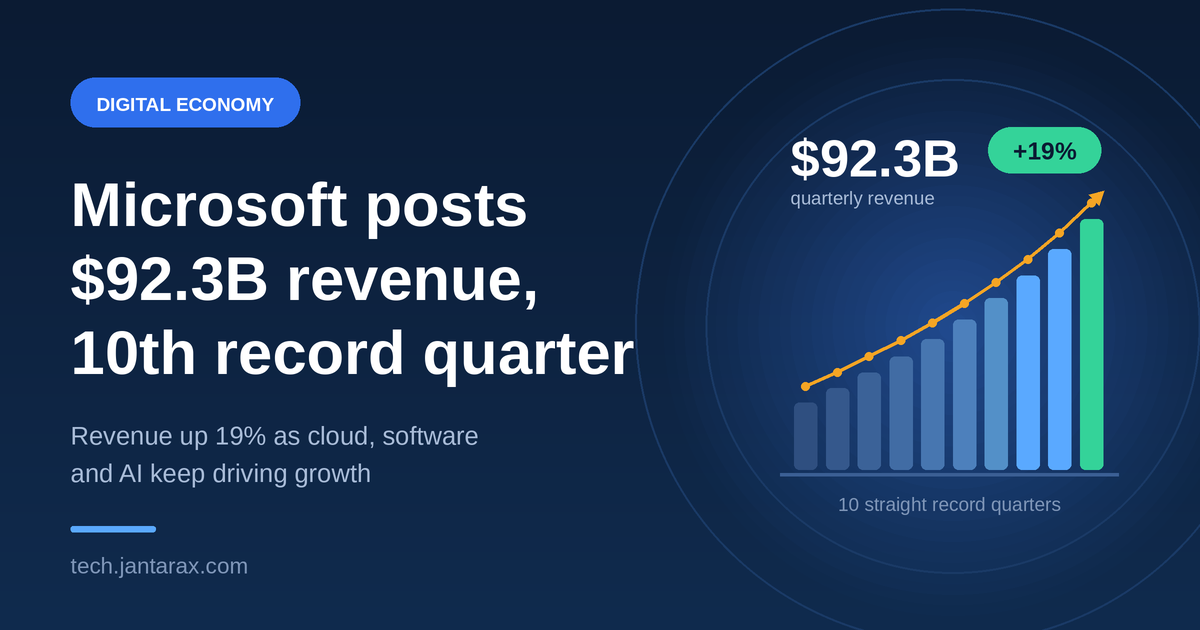
Microsoft has just hit a notable milestone. The company reported $92.3 billion in revenue for its latest quarter, a 19% increase over the same period last year. It marks the tenth consecutive quarter of record-breaking revenue.
Here is a simple guide to what the numbers mean, what is driving the growth, and what could happen next. For more business and tech coverage, explore our Digital Economy and Technology sections at Jantarax Tech.
What Did Microsoft Report?
In its latest financial report, Microsoft announced quarterly revenue of $92.3 billion. Compared with the same quarter a year earlier, that is growth of 19%.
The more striking part is the streak. A record quarter once is impressive. Ten in a row shows steady, consistent growth, even as competition heats up and the economy faces challenges.
The source material does not give a breakdown by business segment, profit figures, or the exact quarter name. For those details, read Microsoft’s official earnings release, which is usually posted on its investor relations site.
What Does “Record Revenue” Mean?
Revenue is the total money a company brings in from selling its products and services, before costs are subtracted. When a company reports record revenue, it means that quarter’s sales were higher than in any earlier quarter.
It is important to separate revenue from profit. Revenue shows how much a company sells. Profit shows how much is left after expenses. A company can have rising revenue and still see changing profits, so both numbers matter. This is general background, not from the report.
What Is Driving Microsoft’s Growth?
The company’s sustained growth is linked to several factors.
Cloud computing. Microsoft’s cloud services have become a core part of its business. Many companies run their websites, apps, and data on cloud platforms instead of their own servers.
Azure. Azure is Microsoft’s cloud platform, and it has seen significant adoption. Businesses use it to store data, run software, and build AI tools, which has contributed to the company’s overall financial success.
Software products. Microsoft’s well-known software remains widely used by businesses and individuals, giving the company a steady base of revenue.
Investments in artificial intelligence. Strategic spending on AI has helped Microsoft add new features and attract customers who want AI-powered tools.
Why Is Azure So Important?
Cloud platforms like Azure rent computing power over the internet. Companies pay for what they use, which makes it easier to start small and scale up. It also means the provider can earn steady revenue as customers grow.
AI has made this even more important. Training and running AI systems requires large amounts of computing power, and many companies prefer to rent it from cloud providers instead of building their own data centers. That demand helps explain why cloud and AI are so closely linked in the company’s story.
How AI Fits In
Analysts suggest that Microsoft’s focus on AI and cloud services will continue to drive growth in the coming quarters. AI is now part of how many businesses work, from writing and analysis to customer service and coding.
For a look at how AI is already changing smaller companies, read our guide on how small businesses are saving time with AI. The push to build AI products is also fueling debate about how it should be governed, a topic we cover in our brief history of AI executives calling for regulation.
Competition and Economic Challenges
Microsoft’s results come at a time of growing competition. Rival tech giants are investing heavily in cloud and AI, and new startups are challenging established products. For example, a former Meta AI director recently left to build a new workspace aimed at rivaling traditional office software, as we covered in our story on Rohit Patel’s Ndoc.
Economic conditions also affect technology spending. When businesses worry about costs, they may delay purchases or cut budgets. That Microsoft kept growing through these pressures suggests demand for its products remained strong.
What Does This Mean for Investors and Customers?
This section is general commentary, not financial advice.
For investors: Consistent record revenue is often viewed as a sign of a healthy business. But stock prices depend on many factors, including profit, expectations, and market conditions. Always do your own research or speak with a licensed financial advisor.
For business customers: Strong results can signal that Microsoft has the resources to keep investing in its products. That may mean more features and support over time, though prices and plans can change.
For everyday users: Growth in AI and cloud services may bring new tools to the apps you already use. It may also raise questions about privacy and data use, so it helps to review your settings regularly.
What Happens Next?
Microsoft is expected to maintain its growth trajectory as it invests further in emerging technologies. The company will likely keep improving its products and expanding its market reach, which could lead to even stronger results in future quarters.
Things to watch include:
- Azure growth rates in upcoming reports.
- New AI products and features and how quickly customers adopt them.
- Spending on data centers and computing infrastructure.
- Moves by rivals in cloud and AI.
- Regulatory developments that affect big technology companies. Our Policy section tracks these.
Can the Streak Continue?
No streak lasts forever, and growth rates tend to slow as a company gets bigger. Even a smaller percentage gain on such a large base can mean billions of dollars. Whether Microsoft can keep posting records will depend on cloud demand, AI adoption, competition, and the wider economy.
Analysts’ expectations are positive, but expectations are not guarantees. It is wise to watch future earnings reports rather than assume the trend will continue.
Frequently Asked Questions
How much revenue did Microsoft report?
$92.3 billion for the quarter.
How much did revenue grow?
By 19% compared with the same quarter last year.
What is the tenth consecutive record?
It means Microsoft has now set a new revenue record for ten quarters in a row.
What is driving Microsoft’s growth?
Cloud computing, including Azure, software products, and strategic investments in AI.
Does record revenue mean record profit?
Not necessarily. Revenue is total sales, while profit is what remains after costs. Check Microsoft’s full earnings report for profit details.
Will growth continue?
Analysts expect AI and cloud services to keep driving growth, but future results are not guaranteed.
Conclusion
Microsoft’s tenth consecutive record-revenue quarter is a clear sign of strong performance. The $92.3 billion result, up 19%, reflects the strength of its cloud, software, and AI strategy. Its ability to keep innovating and serving customers will be key to keeping the momentum going.
For more updates, learn about Jantarax Tech or contact our team with tips and feedback.
- artificial intelligence
- tech news
- Microsoft
- Microsoft record revenue
- Microsoft earnings
- record revenue
- Azure
- cloud computing
- quarterly results
- tech stocks
- Microsoft growth