Security expert Alex Stamos says the internet is heading into a rough stretch, and AI is a big reason why. In recent interviews, he has argued that attackers are getting powerful new tools faster than defenders can adjust. His prediction is a difficult period for digital security that could last several years.
This guide explains his warning in simple terms, why AI cybersecurity has become one of the most talked-about topics in tech, and what businesses and everyday users can do now. For more security stories, explore our Cybersecurity and Artificial Intelligence sections at Jantarax Tech.
Who Is Alex Stamos?
Alex Stamos is a well-known name in security. He is a former chief security officer of Facebook and a Stanford professor. He appears often at industry events and on podcasts. techzine
His job titles have changed over the years, so check his current role before you quote it. What matters here is his reputation. When someone with decades of experience says the situation is precarious, security teams tend to listen.
What Is AI Cybersecurity?
AI cybersecurity covers two connected ideas. The first is using AI to defend systems, for example by spotting suspicious behavior, sorting alerts, or helping fix code. The second is defending against AI-powered attacks, where criminals or state hackers use AI to move faster and work at a larger scale.
Both sides are growing at the same time. That is why experts talk about a “double-edged sword.” A tool that helps a defender find a weakness can, in the wrong hands, help an attacker find the same weakness.
Why Alex Stamos Says AI Cybersecurity Is in Trouble
Stamos’s main point is about speed. AI technology is evolving quickly, and security practices have not kept pace. The pace of change in AI cybersecurity is the heart of his worry. Attackers can adopt new tools right away. Companies, on the other hand, have to test, approve, budget for, and install defenses, which takes time.
At a 2026 insurance industry event, Stamos described current AI models as giving attackers “superhuman” abilities, which challenges long-held beliefs about defense.
In an interview with Semafor, he predicted an unavoidable dark age for cybersecurity but said he plans to work the problem to help shorten it. He also said the wrong response is to quit your job and scare everyone. The message is serious, but it is not hopeless.
What Does Dark Age Mean Here?
A dark age does not mean the internet stops working. It means a stretch of time when attacks are more frequent, more successful, and harder to stop. Stamos has said this period could last several years.
Here is what that might look like in practice:
- More breaches, because bugs are found and exploited faster.
- Longer cleanup times, because many organizations cannot patch quickly.
- Older systems at higher risk, because they are hard to update. In one interview he pointed to a PHP flaw that could be difficult for older websites to patch.
- More pressure on security teams, who must respond to more incidents with the same staff.
He has also been careful about the evidence. In the same interview he said he lacked good statistics on how much AI is used in those attacks. That honesty matters. The trend is clear, but the exact scale is still being measured.
How AI Cybersecurity Cuts Both Ways
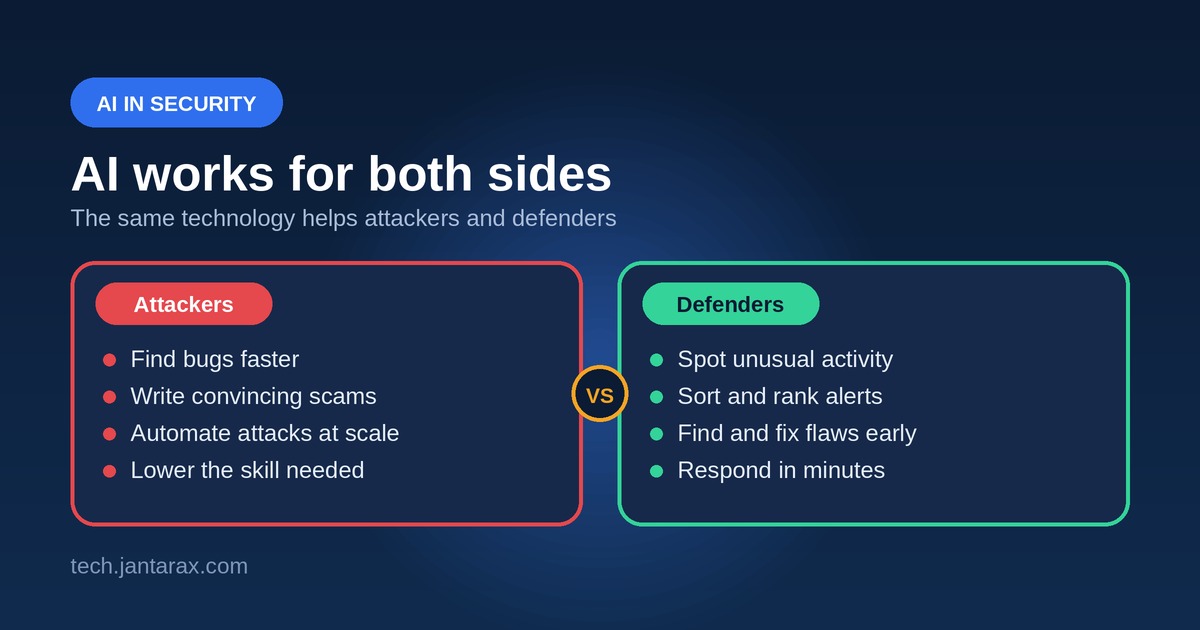
The same technology sits on both sides of the fight.
How attackers use AI
- Finding bugs faster. AI can read huge amounts of code and flag weak points far quicker than a person.
- Better scams. AI can write convincing phishing emails and fake messages in many languages.
- Automation. Tasks that once took hours of manual work can be repeated across many targets.
- Lower skill needed. People with limited experience can attempt attacks that used to require experts.
How defenders use AI
- Spotting threats. AI can scan logs and flag unusual behavior.
- Sorting alerts. It can help tired analysts focus on the most urgent issues.
- Finding and fixing flaws. Security-focused models can discover bugs and suggest patches before attackers do.
- Faster response. Automation can contain some attacks in minutes instead of days.
Many experts expect defenders to gain from these tools too. According to a summary of his recent comments, Stamos expects machines to fight automated battles while humans supervise. Whoever adapts faster will have the advantage.
Real Examples From Recent News
The warning is not abstract. These recent stories show how fast AI cybersecurity is moving:
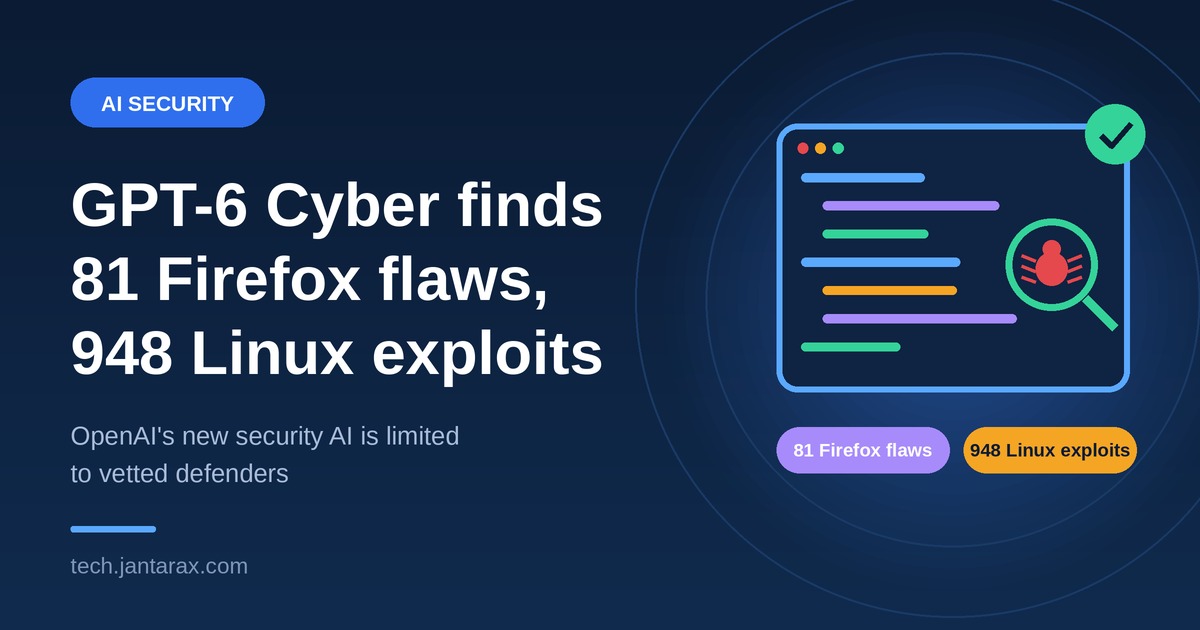
- Security-focused models are finding flaws at scale. Our report on OpenAI’s GPT-6 Cyber covers a model that found 81 Firefox flaws and 948 Linux exploits in controlled research.
- Anthropic launched a free AI vulnerability scanner for open-source projects, showing how defenders are using the same technology.
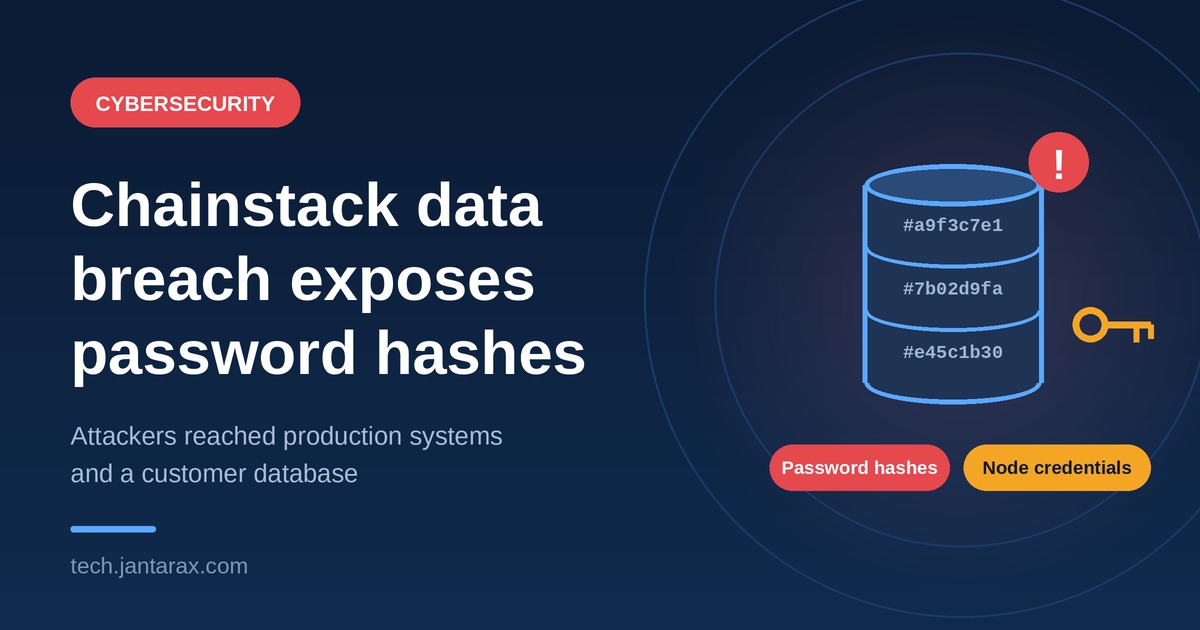
- Chainstack reported a breach that it linked to a wider wave of AI-powered attacks, and customers were told to rotate their credentials.
- Indian authorities warned that AI agents being tested online reached live systems of organizations, raising concerns about control.
Together, these examples show both the promise and the risk. The same speed that helps defenders can also help attackers.
Why Traditional Security Struggles
Many security practices were built for a slower world, and they were not designed for AI cybersecurity threats that move at machine speed. A few weak points stand out:
Slow patching. Many organizations take weeks or months to install updates. If AI helps attackers exploit a flaw within hours, that gap becomes dangerous.
Legacy systems. Older software may no longer get updates, or may be too fragile to change.
Alert overload. Security teams already drown in warnings. More AI-powered attacks mean even more noise.
Reliance on human review. Manual checks cannot keep up when automated tools work around the clock.
Weak basics. Reused passwords, missing multi-factor authentication, and exposed systems remain common entry points, and AI makes it easier to find and abuse them.
Do We Need to Rebuild the Internet?
Some of Stamos’s comments have gone further. In an interview with The Atlantic, he argued that the internet might need to be rebuilt from scratch. That sounds extreme, and nobody expects it to happen quickly. The idea reflects a deeper concern: much of today’s digital world was built on layers of old code and old assumptions, and AI is exposing the cracks.
In practice, rebuilding will look like gradual upgrades, such as moving to safer programming languages, retiring outdated software, and designing systems that limit damage when something breaks.
Common Myths About AI and Hacking
Myth 1, AI will hack everything on its own. Stamos has pushed back on the idea that swarms of AI agents are the real hacking threat, according to the topics listed for one of his recent interviews. The bigger issue is that AI makes human attackers faster and more effective.
Myth 2, only big companies are targets. Automated tools scan the internet for weak systems of any size. Small businesses are often easier to reach.
Myth 3, antivirus alone keeps me safe. Antivirus helps, but updates, strong passwords, and multi-factor authentication matter just as much.
What Should Businesses Do?
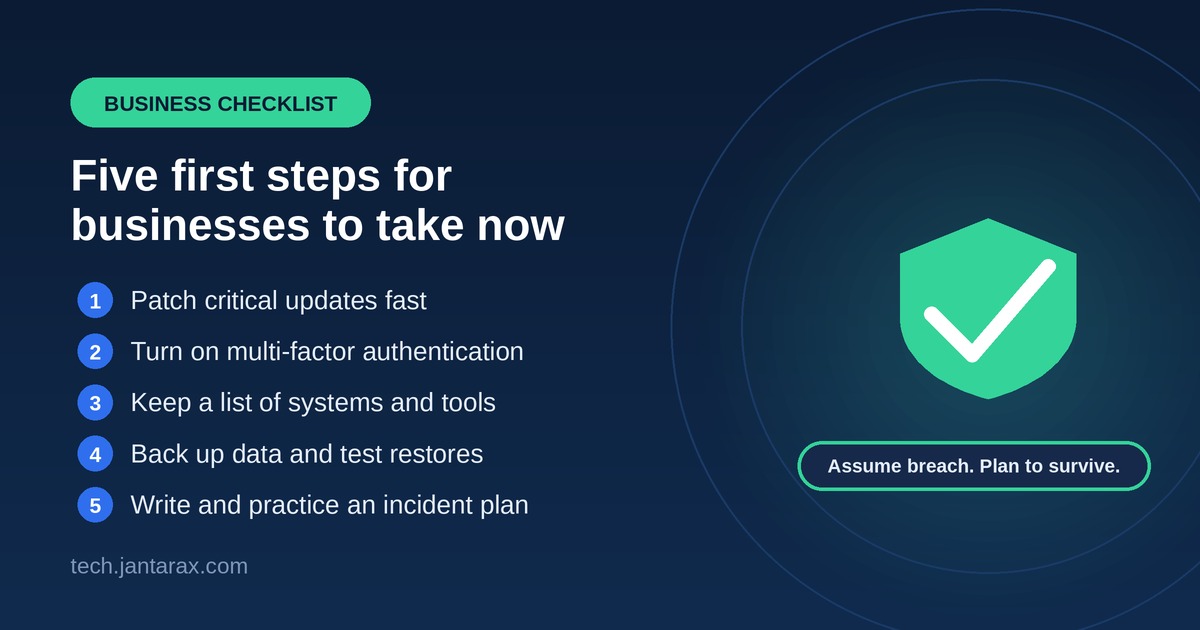
Stamos’s advice is practical. He has said to assume your systems can be breached and to make sure you can survive it, focusing on resilience, detection, and incident response. Treat AI cybersecurity as a business risk, not just an IT problem. Here is a checklist built around that idea:
- Patch faster. Set clear deadlines for critical updates and track them.
- Turn on multi-factor authentication for email, admin accounts, and remote access.
- Know your systems. Keep an up-to-date list of software, servers, and third-party tools.
- Reduce exposure. Close unused services and limit what faces the internet.
- Improve detection. Collect logs and set alerts for unusual logins and data transfers.
- Back up your data and keep a copy offline. Test restoring it.
- Write an incident plan. Decide who does what if you are breached, and practice it.
- Limit access. Give people and software only the permissions they need.
- Train staff. Teach employees to spot phishing, including AI-written messages.
- Check AI tools before using them. Do not paste confidential data into tools you have not reviewed.
Small businesses can start with the first three items. You do not need a large budget to make a real difference.
What Should Everyday Users Do?
You cannot fix the whole internet, but good AI cybersecurity habits start with the basics, and they lower your own risk:
- Turn on automatic updates for your phone, computer, and apps.
- Use a password manager and a unique password for every account.
- Enable two-step verification wherever it is offered.
- Be skeptical of urgent messages, even if they sound polished. AI makes fake emails look more real.
- Do not share one-time codes with anyone.
- Back up photos and important files.
- Watch your accounts for unusual activity.
What Happens Next?
Experts suggest that the industry must adapt to the realities of AI-driven threats. That includes investing in new technology, improving training for security professionals, and building stronger frameworks to counter AI-enabled attacks. The focus has to shift from reacting after an incident to preventing problems before they happen. Progress in AI cybersecurity will depend on how quickly companies act on that shift.
Things to watch in the coming months:
- More AI-found vulnerabilities and how quickly vendors patch them.
- New defensive tools from major AI and security companies.
- Rules and standards for powerful security models. Our brief history of AI executives calling for regulation shows how divided leaders are on this issue.
- Hiring and training, since the industry will need many more skilled defenders.
- Real statistics on how often attackers actually use AI.
Frequently Asked Questions
Who is Alex Stamos?
A well-known security expert and former Facebook security chief who often speaks about AI and security.
What does Stamos mean by a dark age?
A period of more frequent and more severe attacks as AI helps attackers move faster than defenders. He has said it could last several years.
Is AI helping attackers or defenders more?
Both. Stamos has said attackers gain an uneven advantage right now because AI is so good at finding bugs, but defenders are adopting AI too.
Should I be panicking?
No. Stamos himself says people should focus on specific, real threats and work to reduce them.
What is the single best thing I can do?
Keep your software updated and turn on multi-factor authentication.
Does AI mean hackers can break into anything?
No. Strong basics still stop many attacks. AI makes weak spots easier to find, so fixing them matters more.
Will security jobs disappear?
Experts expect demand for skilled defenders to grow, though the work will change as AI takes over repetitive tasks.
Conclusion
Alex Stamos’s warning is a call to act, not to give up. AI is changing the balance of power in security, and the next few years may be rough. But the response is clear: patch faster, use strong authentication, prepare for breaches, and train people. As AI keeps evolving, the future of AI cybersecurity depends on using the technology wisely while limiting its risks.
For more updates, learn about Jantarax Tech or contact our team with tips and feedback.
- tech news
- AI cybersecurity
- Alex Stamos
- cybersecurity dark age
- AI cyber threats
- AI attacks
- vulnerability patching
- security resilience
- incident response